A First-Hand Look at How We Got a Business Back on Track

A few days ago, we were called out to a commercial building where the owner had noticed bubbling along the interior walls and a couple of slow drips after the last storm. They weren’t sure exactly what was going on, but they knew their roof was a TPO system and that something wasn’t right. That’s where we stepped in.
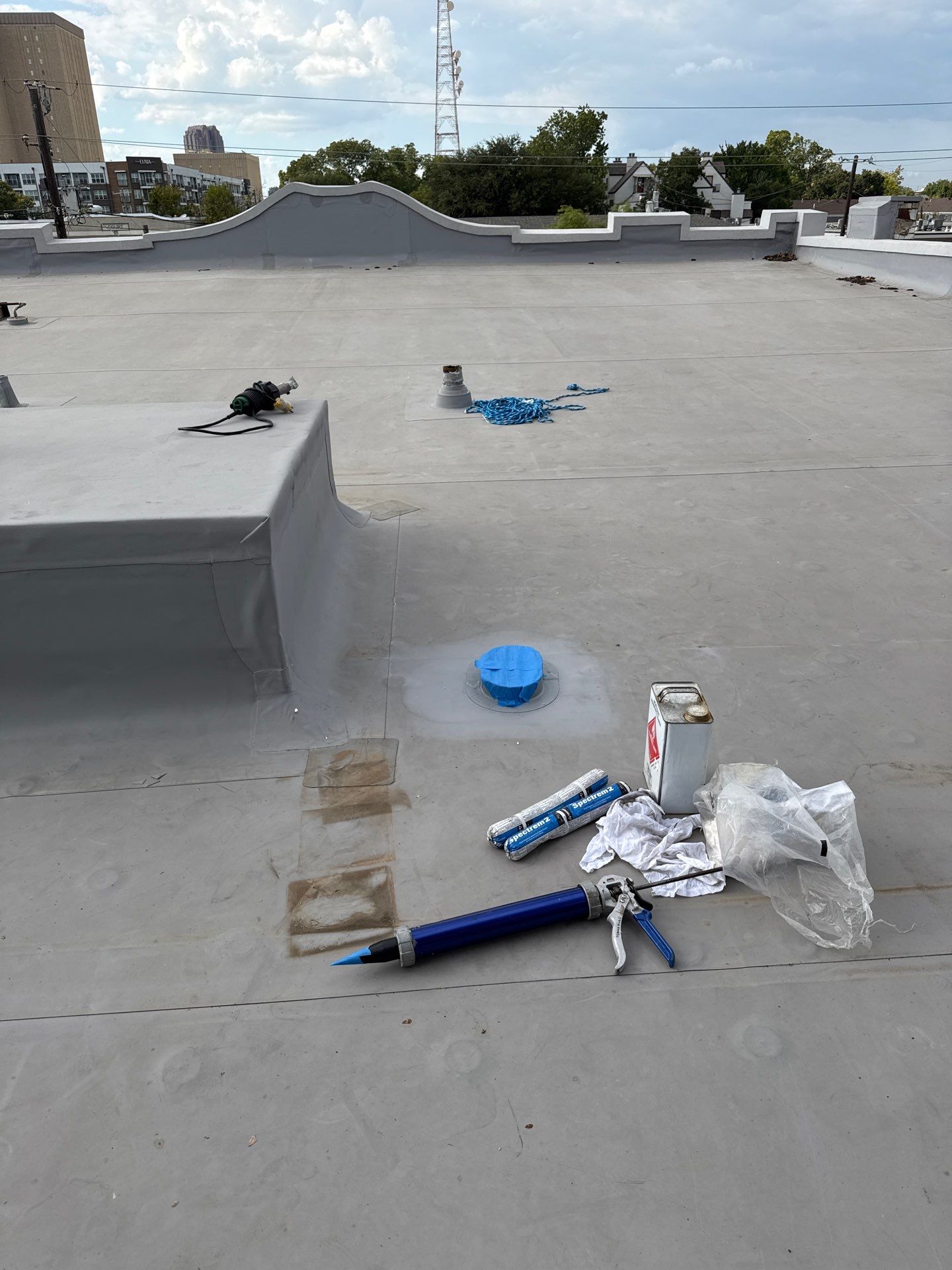
As soon as we got to the property, we headed straight up to the roof. Right away, we spotted the first problem: several long seams were starting to split open. UV exposure and age had caused the membrane to shrink just enough to pull the seams apart, allowing water to sneak underneath. On top of that, a few of the TPO pans were completely loose — something that would have turned into a major leak if it had been left untreated.
We knew this job needed more than just patchwork. So we got to work.
Here’s what we did step-by-step:
1. Re-welded all failing TPO seams
We started by carefully cleaning each open seam, removing dirt, debris, and loose membrane. Once everything was prepped, we used our heat welder to re-seal the seams, creating a tight, solid bond. Every seam we touched was tested to ensure it had a full, even weld — no shortcuts.

2. Repaired and secured failing TPO pans
The pans had pulled away due to movement on the roof and old adhesive giving out. We lifted each pan, cleaned the underlying area, applied fresh bonding adhesive, and re-set them into place. Then we heat welded the edges to lock everything in, making them watertight and ready for more Texas weather.
3. Inspected the membrane for punctures or weak spots
Since TPO can develop small tears over time, we walked every square foot of the roof. We marked any questionable areas and reinforced them with patches where needed. This prevents future leaks and strengthens the overall system.
4. Checked all penetrations, curbs, and flashing
HVAC curbs, pipes, and corners are the first places water tries to sneak in. We went around every penetration and made sure the flashing was tight and sealed. Any loose or aging flashing was repaired or replaced.

5. Made sure the drainage system was flowing
A repaired TPO roof means nothing if water is sitting on it. We cleaned out debris from the drains and ensured the slope was clear, allowing water to move properly across the membrane.
By the time we wrapped up, the roof looked completely refreshed — seams sealed, pans secured, weak points reinforced, and every inch checked for peace of mind. The business owner told us they hadn’t seen the roof look this good since it was installed.
And honestly, that’s what we aim for on every commercial repair. With TPO systems, one open seam or one loose pan can turn into thousands of dollars in interior damage. That’s why we treat every repair like it’s our own building on the line.
If your TPO roof is showing signs of wear, splitting seams, or loose areas, we’re ready to help. At Kimber Services, we repair roofs with durability, safety, and long-term performance in mind — every single time.