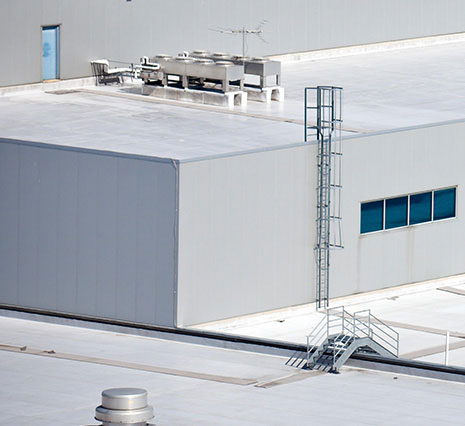
At Kimber Services, working on flat roof systems is one of the most technical parts of what we do — and it’s an area where experience truly matters. Flat roofs require precision, the right materials, and a deep understanding of how water moves across a surface. When a business hires us for their flat roofing project, we take every step seriously to ensure long-term durability and performance.
Here’s how we handle flat roof systems from start to finish.
1. A Complete Evaluation of the Existing Roof
Before we begin any work, we perform a full inspection of the current roof system. Flat roofs are different from pitched roofs — issues are often hidden or spread across larger areas.
During our evaluation, we check:
- Seam integrity
- Membrane condition
- Punctures or tears
- Ponding water
- Drainage and slope
- Flashing around edges and penetrations
- Insulation and underlayment
- Evidence of leaks inside the building
This helps us determine whether the roof needs a repair, reinforcement, coating, or a full replacement.

2. Choosing the Right System for the Building
Flat roofs are not one-size-fits-all. Once we understand the condition of the roof, we help the customer choose the best system for durability, budget, and performance.
We commonly work with:
- TPO (Thermoplastic Polyolefin) — energy-efficient, reflective, and highly durable
- PVC (Polyvinyl Chloride) — excellent chemical resistance, long lifespan
- Modified Bitumen — flexible, strong, multi-layer protection
- Roof coatings — silicone, acrylic, or elastomeric for restoration and waterproofing
We explain every option in detail so the building owner can make a confident, informed decision.
3. Preparing the Roof Surface
Flat roof success depends heavily on preparation. We start by:
- Removing old materials (if needed)
- Cleaning the entire surface
- Repairing damaged areas
- Installing insulation boards
- Ensuring proper slope and drainage
- Checking and sealing penetrations
A clean, stable surface ensures the new system bonds correctly and lasts for years.

4. Installing the Flat Roof System
Installation is where our precision really matters. Flat roof systems rely on tight seals and exact placement — every inch counts.
Depending on the system, installation includes:
For TPO or PVC Systems
- Laying out membrane rolls carefully
- Heat-welding seams for waterproof sealing
- Securing edges and perimeter metal
- Flashing pipes, vents, and HVAC units
- Reinforcing all end sections and transitions
For Modified Bitumen
- Installing base sheets
- Applying layers with adhesive or torch-down
- Sealing seams and overlapping sections
- Ensuring a smooth, even application
For Coating Systems
- Priming the surface
- Rolling or spraying coating evenly
- Reinforcing seams and weak spots
- Building thickness to manufacturer specifications
Every flat roof system we install is done with accuracy, uniformity, and absolute attention to detail.
5. Ensuring Proper Drainage
One of the biggest challenges with flat roofs is water. That’s why we take drainage seriously.
We check:
- Internal drains
- Scuppers
- Gutters
- Downspouts
- Low areas where water might pond
If necessary, we make adjustments to ensure water flows properly off or through the roof — because standing water is the enemy of every flat roof.
6. Final Inspection and Documentation
Before we wrap up, we perform a comprehensive final inspection. We verify:
- Seam integrity
- Flashing coverage
- Drainage performance
- Correct membrane thickness
- Cleanliness of the work area
- Full compliance with manufacturer specs
We provide documentation, photos, and warranty information so the business knows exactly what was installed and what to expect from it.
Flat Roof Expertise You Can Trust
Flat roof systems demand experience — and at Kimber Services, we’ve spent years perfecting the process. Whether it’s a small commercial building, a warehouse, or a large facility, we deliver roofing systems built for protection, efficiency, and longevity.
If your flat roof needs repair, replacement, or a full system upgrade, we’re here to help secure your building from the top down.