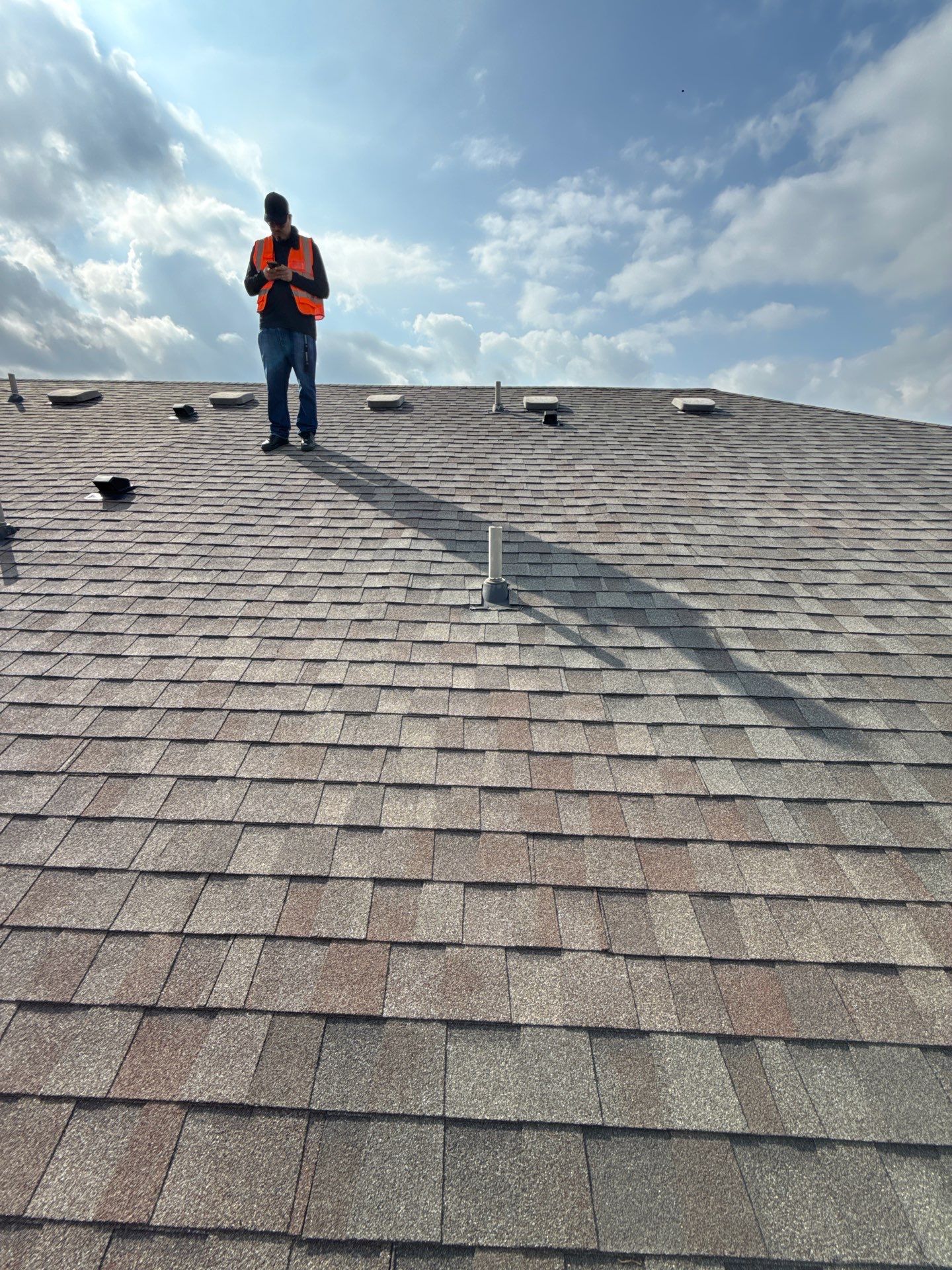
Finding the Source of Ongoing Leaks
Earlier this week, we were called out to inspect the roof of a mid-sized apartment building that had been dealing with recurring leaks in several units. The property manager told us they had patched the ceiling a few times, but the leaks kept coming back — especially after heavy rain. That’s when they reached out to us at Kimber Services to find out what was really going on.

As soon as we got onsite, we headed up to the roof for a full inspection. The building had a shingle system, and right away we could tell something wasn’t right. Before even stepping onto the slope, we could see missing shingles, exposed nail heads, and creased tabs from wind damage.
But the real cause of the leaks didn’t reveal itself until we started digging deeper.
Here’s what we found during the inspection:
1. Multiple lifted and missing shingles
Several shingles had completely blown off, creating open paths for water to enter the decking. Other shingles were partially lifted — something that often goes unnoticed from the ground but causes major problems during storms.
2. Failing pipe jack boots
A few pipe boots were cracked around the base, and water was running directly down into the attic spaces above the affected units. This alone was responsible for at least two of the leaks the manager had reported.

3. Exposed and rusted nails
There were nail heads showing in multiple areas, especially around previous repairs. Rusted nails lose their seal over time and become tiny entry points for moisture.
4. Granule loss and brittle shingles
Because the roof had some age on it, certain sections showed heavy granule loss and brittle shingles that were beginning to crack. These areas are extremely vulnerable and typically the first to leak.
5. Improper previous patchwork
Someone had tried patching parts of the roof with mismatched shingles and sloppy sealant. Instead of fixing anything, the patchwork actually created new voids for water to get underneath.

What we recommended
After documenting every issue with photos and video, we sat down with the property manager to go over the findings. We explained which areas were causing the active leaks, what needed immediate attention, and what repairs could wait — although the roof was clearly nearing the end of its life.
Our immediate recommendations included:
-
Replacing all missing, lifted, and broken shingles
-
Re-sealing exposed nail heads
-
Replacing cracked pipe boots
-
Reinforcing weak spots around valleys and transitions
-
Addressing the improper repairs that were making the leaks worse
We also gave them a timeline and estimate for a full roof replacement in the future, since the age and brittleness of the shingles meant repairs would only buy so much time.
By the end of the inspection, the manager told us this was the most detailed roof report they had ever received. For us, that’s the goal every time — clear answers, honest recommendations, and a full understanding of what’s happening on the roof.
When it comes to multi-unit buildings, even a small leak affects multiple families. At Kimber Services, we take that seriously. Our inspections are thorough, transparent, and focused on solving the problem at the source — so your residents can stay dry and your building can stay protected.